Table Of Content
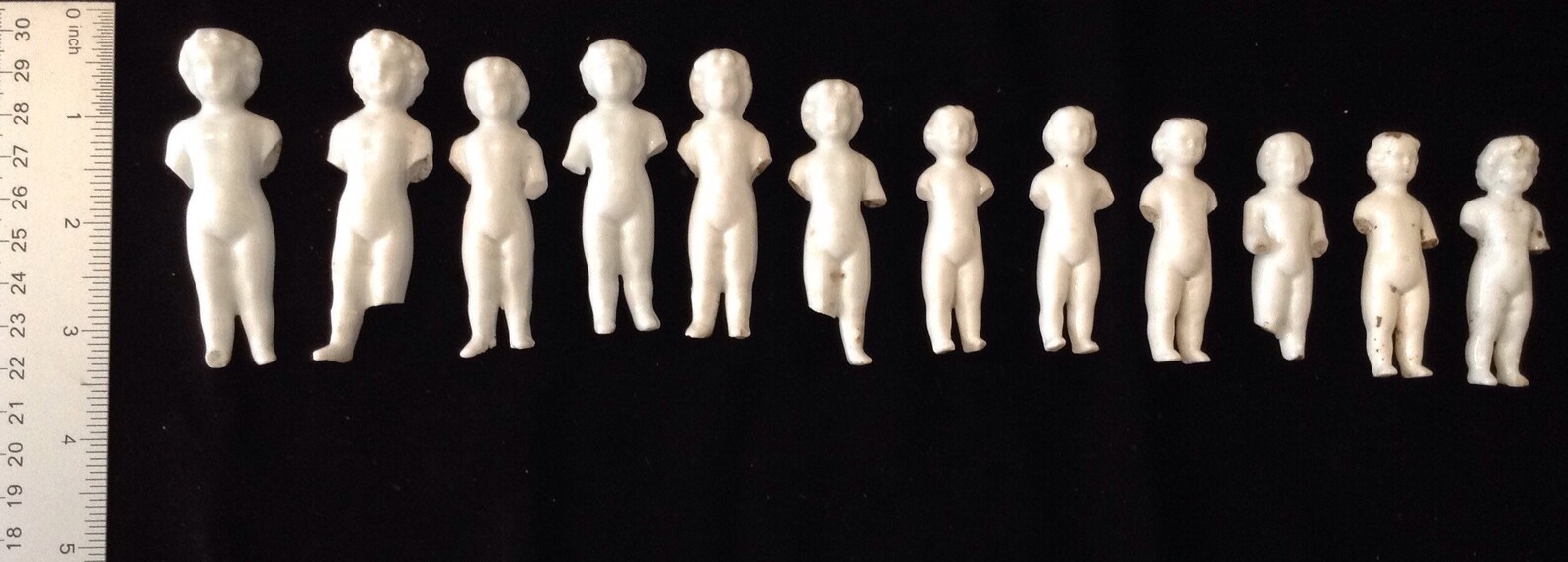
Was this presumably Victorian connection between Charlotte’s legend and the penny doll a lingering memory from the 19th century? Another kind of doll, called a Half-Frozen Charlotte, has arms attached to the body by a wire that goes through the shoulders. These are "frozen" except for their arms, with straight, skinny little bodies. Other half-frozen types have fleshier bodies with little bellies and buttocks popping out. They were made in various styles and sizes, of bisque (unglazed ceramic), porcelain, metal, celluloid, terra cotta, ceramic, composition, wood, rubber and even molded sugar and soap.

A Brief History of Scent With Saskia Wilson-Brown
Chichester Mum Studies For Masters After Daughter Finds Toy On Beach - More Radio
Chichester Mum Studies For Masters After Daughter Finds Toy On Beach.
Posted: Sat, 04 Nov 2023 07:00:00 GMT [source]
Their popularity soared in Britain and America, where they were baked into cake as a nice (or not so nice, depending on your tolerance for creepy little porcelain girls) surprise for kids. The song was itself based on a poem by American writer Seba Smith, who first published the poem in a Maine newspaper in 1843. His poem was in turn inspired by an account published in a New York newspaper in 1840 detailing just such an incident. The doll's coloration is sometimes believed to be a reflection of the young lady's frosty demise. All mentions of these dolls from the time period call them “penny dolls,” not “Frozen Charlottes.” So when did the name we use today actually become connected to these little porcelain dolls?
Frozen Charlotte Dolls: Tiny Treasures of History
They were supposed to be designed to float so that children could play with them on the beaches and in the ocean, as well as in the bathtub or a pail of water. Some had an overall pink complexion tint; some had only a pink-tinted face. Apparently business was very brisk for this new doll, as it was produced in quite large numbers by a variety of manufacturers. A New York Observer article published in February 8, 1840 included a story about a woman in upstate New York who froze to death on her way to a New Year’s ball.
Frozen Charlotte: A Macabre Folktale and a Popular Doll
When they arrived, her more-bundled-up beau found her frozen to death in the sleigh. The story says Charlie died of a broken heart soon afterward, and they were buried together in a single tomb. These tiny, pale, porcelain nightmares were pottery dolls manufactured in Germany in 1850, and intended for children to play with during bath time.

Victorian-Inspired Vignettes
The name “Frozen Charlotte” added an element of charm and intrigue to these dolls, linking them to the tragic tale of a young woman who paid the price for vanity and fashion in a harsh winter’s night. When, just a few years later, German bath dolls began appearing in America, people began to link the tiny porcelain dolls with the Frozen Charlotte story. In the ballad, Charles "took her hand in his... 'Twas cold and hard as stone," reminding 19th-century Americans of the porcelain dolls. And unlike larger dolls with movable arms and legs, the German bath dolls were immobile, like the ballad's line saying Charlotte "[sat] there like a monument... [with] no power to stir."
“Frozen Charlotte”
As they played with the dolls, people continued to sing the ballad of Fair Charlotte, until both faded away during the early 20th century. Other versions of the doll were larger, likely meant for display. More expensive versions of the porcelain doll came with painted hair and rosy cheeks. Dolls made from unglazed porcelain or bisque are typically more valuable than newer reproductions. Additionally, dolls from reputable manufacturers may hold greater value. You’ll mostly find female versions of these nightmarish baby dolls, but occasionally, you might see what are known as Frozen Charlies, the male counterpart.
Action Figure Insider » #MezcoToyz Living Dead Dolls Resurrection Frozen Charlotte - Action Figure Insider
Action Figure Insider » #MezcoToyz Living Dead Dolls Resurrection Frozen Charlotte.
Posted: Thu, 21 Jun 2018 07:00:00 GMT [source]
However, if you find such a doll dressed in homemade clothes, examine its body underneath the clothes which can, and often do, disguise a broken or damaged doll. These can be purchased inexpensively, but perfect examples cost much more, depending on features, size and type. Then, there are tiny Frozen Charlotte bathtub dolls sitting in a tub. Some have long hair flowing to their feet; others wear gilt boots, or shoes and socks molded on. Aside from Frozen Charlottes, which were three-quarters of an inch and larger, there were Frozen Charlies, representing Charlotte's beau.
Red Velvet Cake's Journey to The Juneteenth Table
If the doll has a known history, it may be more desirable to collectors. Well, I’m not a ghost expert that’s for sure, but my guess would be no! If you look at their history, these dolls were thought to bring good luck.
This tale, sometimes condensed, was reprinted across the United States in the early 1840s and made its way into British newspapers. Further, it was adapted to poem (or “ballad”) form in early 1841 and credited to “Mrs. Seba Smith” (Elizabeth Oakes Smith, née Prince), an American writer and early feminist. In late 1843 the poem was republished in The Rover, a magazine edited by Smith’s husband; oddly, this time Seba Smith himself was credited as its author.
Moreover, no one writing today about Frozen Charlottes has provided contemporaneous evidence that 19th- and early 20th-century Americans ever considered these small dolls as corpses or the embodiments of a vain young woman who froze on her way to a ball. Newspaper advertisements and writings of the period demonstrate that Americans at least knew these small rigid dolls as “penny dolls,” but toy sellers never seem to have advertised these as “Charlotte” dolls. In fact, nothing in 19th- and early 20th-century publications supports the belief that Americans ever made a connection between these figures and Charlotte [see Note 3 for databases searched].
Design vignettes with a Victorian flair, placing Frozen Charlotte dolls alongside other nostalgic items like vintage books, keys, or shoe forms. Create captivating displays in a curio cabinet or glass display case, protecting the dolls while providing a charming and visually captivating arrangement. Transform Frozen Charlotte dolls into unique pieces of jewelry or accessories.
During the Victorian era, roughly from the 1850s to the 1890s, Frozen Charlotte dolls reached the pinnacle of their popularity. They were cherished not only as children’s toys but also as novelties and keepsakes. One tradition that contributed to their popularity was the custom of “Queen Cake” during Twelfth Night celebrations. In this tradition, a small porcelain figure, such as a Frozen Charlotte, was baked into a cake.
They tried all within their power, Her life for to restore, But Charlotte was a frozen corpse, And is never to speak more. There is music in the sounds of bells, As over the hills they go; What a creaking wake the runners make, As they bite the frozen snow. And away they then go silently, ’Til five cold miles were passed, And Charles with these few frozen words, The silence broke at last.



No comments:
Post a Comment